Good nutrition starts with smart choices in the grocery store. Cooking healthy meals is a challenge if you don’t have the right ingredients in your kitchen, but sometimes it can be difficult to know exactly what to buy at the supermarket. With a little guidance, healthy choices are easy to find in any supermarket.
Aim for variety
Most of us tend to eat the same foods over and over again. But variety really is the spice of life – and the cornerstone of good health. The Food Pyramid shows you how you can vary your foods in a way that ensures good nutrition.
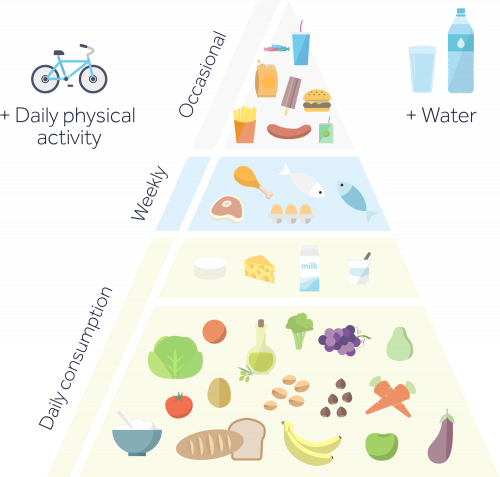
Planning your grocery list
When planning your grocery list, consult the guidelines of the Food Pyramid (put the link to the module with food pyramid) and reach out to your dietitian for advice on which products to include and which to potentially avoid. Here are some shopping tips to help ensure your kitchen is stocked with the right ingredients.
- The process starts before you leave for the grocery store. Before you set out for the market, plan your meals for the week and create a list based on this. It takes a few minutes but helps you to concentrate on the healthy foods you need to buy.
- Do not go to the supermarket hungry. When you do, you put yourself at risk of buying snack foods including the sugary and salty processed foods you would not normally buy. You will also likely spend more money than you had planned to.
- Try to stay in the area of the supermarket where you’ll find the fresh products, lean proteins (eggs, low-fat dairy, chicken breast, fish, etc.) and other important fresh items for a healthy lifestyle. Avoid going to the areas full of tempting foods like soda, candy and chips.
- Fruits and vegetables: Choose a rainbow of colourful fruits and vegetables. The colours reflect the different vitamin, mineral, and phytonutrient content of each fruit or vegetable.
- Breads, cereals and pasta: Choose the least processed whole-wheat breads and pastas, brown rice, grain mixes, quinoa, bulgur, and barley.
- Meat, fish and poultry: Be sure to choose lean cuts of meat (round, top sirloin, and tenderloin), opt for skinless poultry, and watch your portion sizes. Remember to include fish – the American Heart Association recommends two servings of fish a week.
- Dairy: Dairy foods are an excellent source of bone-building calcium and vitamin D. There are plenty of low-fat and non-fat options.
- Canned and dried foods: Keep a variety of canned vegetables, fruits, and beans on hand to toss into soups, salads, pasta, or rice dishes. Whenever possible, choose vegetables without added salt, and fruit packed in juice. Tuna packed in water, low-fat soups, nut butters, olive and canola oils, and assorted vinegars should be in every healthy pantry.
On the Internet, you can find countless recipes that can help you prepare healthy, tasty meals. Here are some links that could be useful for you:
Australian Dietary Guidelines
A Western Australian Health Initiative
A Community based organisation
A support network for dieticians committed to build healthier communities
www.dietitiansaustralia.org.au
State based guidelines