Categories
SMS - Baria

SMS – Baria-E-047 Weight loss surgery and pregnancy

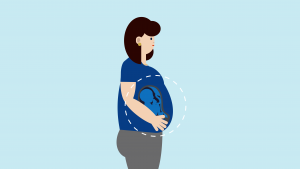
Bariatric surgery can produce a positive change in your fertility. Several studies have found that women with obesity-related fertility issues start ovulating regularly for the first time in years after having bariatric surgery. However, it is important to wait at least 12 months after surgery, and to be sure that your metabolism has stabilised, before trying to become pregnant.

Pregnancy after bariatric surgery is safe — after 12—24 months

After bariatric surgery, your body goes through some potentially stressful changes and significant nutritional upheaval, which can pose problems for a growing baby. To protect you and your baby from the risk of malnutrition, doctors recommend that women avoid pregnancy for 12—24 months after having bariatric surgery.

Long-acting contraception is strongly recommended

If you become pregnant

If you are planning to become pregnant after your post-surgery weight stabilises, it is highly recommended that you remain under the care of a multidisciplinary health care team. It is crucial that your take multivitamin and mineral supplements and that you are regularly monitored by a specialist for deficiencies.

REFERENCES:

Categories
SMS - Baria

SMS – Baria-E-098 My daily activity programme – phase 1

Daily activities and exercising before weight loss surgery is, of course, important for your health. But it is also a first step towards preparing your mindset for what is to come after surgery.

Being physically active helps keep your heart and lungs healthy, it ensures healthy bone density and joint mobility, and it alleviates stress, anxiety, and depression. Fortunately, it doesn’t take much to make a noticeable difference. Start by changing position frequently and generally moving more.

Here’s a daily activity regimen you might follow over the next few weeks.


Daily activities

Make sure to perform normal daily activities such as washing up, cooking for yourself, grocery shopping, and so forth.

There are plenty of ways to incorporate physical activity into your everyday life. If you can, take the stairs instead of the elevator and park your car a little further away from the store and walk the rest of the way. Do things that keep you moving and change positions at least once every hour.

Categories
SMS - Baria

SMS – Baria-E-062 Surgical treatment options for obesity

In the case of significant obesity, bariatric surgery may be worth considering. To qualify, you must meet the following criteria:

  • Have a body mass index (BMI) higher than 40 or a BMI of 35 with associated complications such as type 2 diabetes. Lower BMI may be considered in special circumstances.
  • Be age 18 to 65. Outside this range will be assessed individually.
  • Have no psychological issues that would make bariatric surgery inadvisable.
  • Reasonable surgical candidate. Full pre-operative individual surgical risk assessment before final decision is made
  • Suitable for general anaesthetic, again individual risk assessment necessary before final decision is made.


Bariatric surgery will only be considered if you have attempted, unsuccessfully, to lose weight using specialised medical treatment for several months (with dietary monitoring, physical activity, and psychological therapy). The decision to operate is made jointly by you and your attending physician, surgeon, endocrinologist, nutritionist, and psychologist or psychiatrist.

Weight loss goals

The goal of obesity treatment is to reach and maintain a healthy weight. You will need to work with a team of health care professionals — including a dietitian, behaviour counsellor or an obesity specialist — to help you understand and make changes to your eating and activity habits.

Bariatric surgery does not guarantee a certain amount of weight loss.

The surgery is a catalyst for weight loss – ultimately it is up to you to reach your weight-loss goals. Success depends on personal motivation and effective behavioural change.

Risks and complications

As with any major surgery, weight-loss surgery has risks. Complications are rare yet can become significant due to obesity. Conditions such as diabetes, hypertension and sleep apnoea tend to increase the risk of complications. Thorough pre-surgical preparation along with careful follow-up can reduce the risks. However, it is important that you fully understand all potential risks in order to make an informed decision.

Your skilled surgical team will, of course, do everything they can to avoid complications. If a problem does occur, your surgical team will seek to resolve it as quickly as possible.

Categories
SMS - Baria

SMS – Baria-E-057 Introduction to obesity

Whether it is considered a risk factor for other diseases (World Health Organisation ­ WHO) or a disease itself (World Obesity Federation), obesity is recognised as a serious personal and public health concern. Obesity is defined as body fat accumulation that negatively impacts a person’s health and social and psychological well-being.

The obesity rate is growing in most countries and 28% of adults in the UK are living with obesity. On a global scale, it is predicted that 18% of men and more than 21% of women in the world will obesity by 2025.


Body mass index (BMI)

Body mass index (BMI) is a simple indication of weight-for-height commonly used to classify overweight and obesity in adults. It is calculated as a person’s weight in kilograms divided by the square of their height in metres (kg/m2).

BMI provides the most useful measure of overweight and obesity for the population and is calculated the same way for both genders and for all ages of adults.

A person with a BMI of 30 or higher is considered to have obesity. As BMI increases, so does the severity of obesity. A person with a BMI higher than 35 and obesity-related conditions or a BMI higher than 40 may be a candidate for weight loss surgery.


Categories
SMS - Baria

SMS – Baria-E-029 My preparation journey

During the important months leading up to your surgery, it is imperative that you gain an understanding of what bariatric surgery means for your health and for your quality of life, and how you can best prepare for it. Day by day, you will be gathering new information about preparing your body for surgery while incrementally changing your eating and exercise habits.


Your digital patient engagement programme will help you prepare for your hospitalisation and surgery, guiding you through the information you need to know.


If you aren’t fully committed to following the instructions of your health care team and changing your eating and exercise habits, there is a serious risk that your surgery will not lead to weight loss. Therefore, from the moment you learn you are qualified for surgery, you should begin living a healthier lifestyle, including eating healthier, being more active and reducing alcohol consumption and smoking. (As the procedure draws closer, you will need to stop drinking alcohol and smoking completely.) Not only will this prepare you for a successful surgery and recovery, it will also be the beginning of a whole new, healthier lifestyle.


Categories
SMS - Baria

SMS – Baria-E-028 My hospitalization

Once all the preliminary paperwork has been done by the administrative staff, you will be admitted to your allocated ward. A surgical nurse will check you in and go through the preparations. There will be a period of waiting until your turn comes. It is very hard to time all the logistics perfectly. Regrettably, sometimes the wait time for your turn to the theatre can be substantial. When the operating theatre is ready, you will be checked in by the theatre staff, and the anaesthetist, making sure that all is ready for your surgery.

You will have line/canula inserted into a vein and oxygen administered by mask. This is also when you will have some medicine to help you relax and to get you ready for the anaesthetic. This will usually be the last thing you remember until your surgery is over and you wake up from the anaesthetic in the recovery ward. Once you are fully recovered and stable, you will be taken to the surgical ward for further observation.

Surgical nurses will look after you, making sure that you have enough pain relief and that all your observations are within normal and acceptable levels. Your surgeon will see you on a daily basis or more frequently, if needed. Once you able to tolerate fluids and you are stable, you may be discharged and your full diet progression plans, pain relief and routine medication management will be discussed.

Categories
SMS - Baria

SMS – Baria-E-032 Specialist consultations before surgery

The preparation journey

Bariatric surgery requires extensive preparation to ensure you are physically and mentally ready for the dramatic lifestyle change you are planning to undergo.

During the preparation phase, you will meet several specialists who will assess various aspects of your health. This is both to validate that bariatric surgery is the right option for you and, if so, to optimise your health prior to surgery.

Here is a list of some of the assessments required. Please note that each bariatric centre will follow its own protocol. Speak to your specialist for more information about pre-surgery assessments.


Respiratory medicine assessment and consultation

  • Respiratory diseases are common in connection with obesity and your team will advise if tests are required. The higher the BMI, the more common they are.
  • Respiratory testing investigates three obesity-related issues:
    • Sleep apnoea syndrome (SAS): Patients with sleep apnoea are at higher risk of anaesthesia-related complications. You may be required to wear a special device at night.
    • Respiratory failure
    • Asthma
  • The respiratory medicine consultation will consist of testing for these three issues by means of:
    • A history assessment and pulmonary examination
    • A Pulmonary Function Test (PFT) – breathing test
    • A blood gas measurement – a measurement of the amount of oxygen and carbon dioxide in the blood, done by pricking an artery in the wrist
    • A polysomnography – testing for sleep apnoea syndrome


Cardiology assessment and consultation

The two objectives of the cardiology consultation are:

  • To assess or detect any diseases associated with obesity: high blood pressure, coronary diseases (infarction, angina pectoris) and vascular diseases (damage to the vessels of the neck and the lower limbs)
  • To guide the anaesthesiologist to assess surgical risk


The cardiology consultation includes:

  • A history assessment and clinical examination
  • An electrocardiogram
  • An ultrasound
  • A test for ischemia is sometimes conducted – this is a non-invasive screening for coronary diseases (infarction or angina pectoris) by means of a stress test (on a bicycle or treadmill) or by means of a stress scintigraphy or ultrasound imaging


Endocrinology assessment and consultation

The four objectives of the endocrinology consultation are:

  • To rule out a hormonal cause of obesity that should be treated before considering surgery
  • To assess or detect possible high cholesterol in the blood
  • To assess or detect possible diabetes and adapt the treatment to reduce the risk of high blood sugar in the peri-operative period (the period around the time of surgery)
  • To prepare a plan for monitoring and treating diabetes beyond the surgical procedure (there will be a need to adjust treatment)


Dietetic assessment

The dietetic assessment comprises:

  • A dietary diagnosis
  • The development of personalised educational information

A dietician or nutritionist will assess your dietary profile to help you adjust and balance your diet and to set up the first preoperative counselling sessions.

Specifically, they will be assessing for possible eating disorders that require treatment to help you modify your habits before surgery. These modifications are important for the success of the surgery.

Some patients may be required to lose some weight before surgery to make the procedure safer and the recovery easier.


Psychological assessment and consultation

The psychological assessment:

  • Assesses your motivation, your ability to implement the necessary behavioural changes and your ability to adhere to the long-term postoperative follow-up programme.
  • Identifies contraindications for surgery, such as a serious eating disorder, which can have a dangerous impact on bariatric surgery.
  • Proposes additional behavioural management of any psychological problems identified before surgery. Psychotherapy may be prescribed before and after the procedure.


Digestive assessment

A digestive assessment aims to:

  • Diagnose and evaluate the state of the stomach by means of a gastro-duodenal fibroscopy using a tiny camera called an endoscope. This procedure looks for the presence of a hiatal hernia, acid reflux and its consequences, or ulcers. In this of an ulcer, a biopsy will be carried out to look for the presence of a bacteria called Helicobacter pylori, which may be causing the ulcer and must be treated before surgery.
  • Diagnose and assess the condition of the liver, which often has excess fat. This examination is done by means of an ultrasound and blood test.


Pre-anaesthesia consultation

A thorough medical examination is carried out by an anaesthetist or by a bariatric physician who will liaise with the anaesthetist. This exam gives your healthcare team a better understanding of who you are and your medical and surgical history. It determines which medications you should take, if any. 

You will be required to bring to the consultation the results of all the assessments that were prescribed for you.


The anaesthetist will consider all of the results and decide if there are any contraindications for the procedure ­ that is anything indicating that you shouldn’t have the procedure ­ and whether they are temporary or permanent.


If the assessment is incomplete, additional testing may be prescribed for you, such as an electrocardiogram, blood and urine tests and a dental examination. You must bring the results of these tests to the clinic on the day of your surgery.


At this consultation, the type of anaesthesia selected according to your health condition and the surgical procedure will be explained to you. In addition, you may be offered stress management techniques, such as hypnosis and relaxation.


The anaesthetist will explain to you how the procedure and the postoperative follow-up will be carried out (with respect to your personal treatment).


You will also be informed whether a blood transfusion will be necessary.

Please make sure to ask your anaesthetist any other questions you may have.
Categories
SMS - Baria

SMS – Baria-E-034 What to pack for my hospital stay?

The following is a list of items you might consider packing in order to make your stay in hospital easier and more comfortable:

  • Paperwork: insurance card/information, completed health care proxy form, identity card
  • List of allergies
  • Contact information: An emergency contact number plus phone numbers of any physicians, family and friends you might need to contact
  • Medications: be sure to pack all medications you are taking in their original packaging, as well as your medication list and prescriptions (dosage and how often you take them)
  • Toiletries: soap, shampoo, deodorant, toothbrush, toothpaste, comb/brush, shaving kit, hand lotion, cosmetics etc.
  • Clothes and footwear: loose-fitting clothes such as tracksuit bottoms or jogging bottoms, jogging top, jumper or perhaps a cosy cardigan, t-shirts, pyjamas, bathrobe, slippers
  • Eyeglasses (not contact lenses)
  • Any assistive devices you use (walker, cane, etc.)
  • Prostheses, dentures, hearing aids and similar items


Bring only items that are completely necessary. Leave all valuables and personal items like jewellery, large amounts of cash or credit cards at home. Bring only a small amount of cash for purchasing newspapers, television access, etc. The hospital is not responsible for loss or theft of any personal belongings.

Your clinic will provide additional advice for your stay in hospital.

Categories
SMS - Baria

SMS – Baria-E-039 My pathway after surgery

A healthy new you awaits


During the first 6 months after surgery, it will be very important to follow the instructions of your health care team to the letter. Your team will prescribe a post-operative nutrition protocol, vitamin and mineral supplements and a physical activity programme. You will also need to attend several follow-up visits with your health care specialists. Get Ready will keep you on top of everything you need to remember during your short-term follow-up.


Don’t hesitate to contact your health care team

If you have any doubts about how to follow your post-surgery instructions, do not hesitate to contact your health care team. If you need psychological or peer support, do not hesitate to reach out to the relevant resources. For more information, contact your bariatric clinic. During the short-term follow-up phase, Get Ready will ask you to complete some questionnaires that will help your health care team better serve you.

Categories
SMS - Baria

SMS – Baria-E-041 Post-bariatric reconstructive surgery

If you have experienced significant weight loss after bariatric surgery, you may be left with excess skin in certain areas of your body. Some bariatric surgery patients opt for reconstructive surgery to remove this loose skin.

Plastic surgeons use contouring techniques such as tummy tuck and body lift to remove post-bariatric excess skin. These procedures have proven successful in refining the patient’s body and helping them enjoy everyday activities to the fullest.

To qualify for post-bariatric reconstructive surgery, patients must meet certain health requirements. Ask your GP or surgeon if you are a good candidate. If you are not, try to find out what you can do to improve your health status in order to qualify.


Criteria for reconstructive surgery:

  • Good general health status
  • At least 1.5-2 years after bariatric surgery

Weight loss has been concluded for at least 6 months

  • BMI of 25 or lower – to ensure better short-, mid- and long-term results
  • No vitamin/mineral deficiency
  • No smoking – promotes better healing of scar tissue
  • No active pregnancy, no pregnancy planned for the next 2-3 years
  • Stable diet and regular exercise
  • Realistic expectations

Many people want to know if their health insurance or public health system will cover the cost of post-bariatric reconstructive surgery. Some procedures are covered, while others are not.

With the exception of certain types of breast reduction surgery, post-bariatric reconstructive surgery is usually performed by private clinics. The patient should check the health insurance provider to find out their level of cover. The best approach is to cross-check cover with item numbers. Some private clinics only offer limited no-excess reconstructive surgery. We provide limited abdominal reconstruction procedures.