Categories
Klinik Obezite

KO-E-067 Sleep apnoea

Sleep Apnea

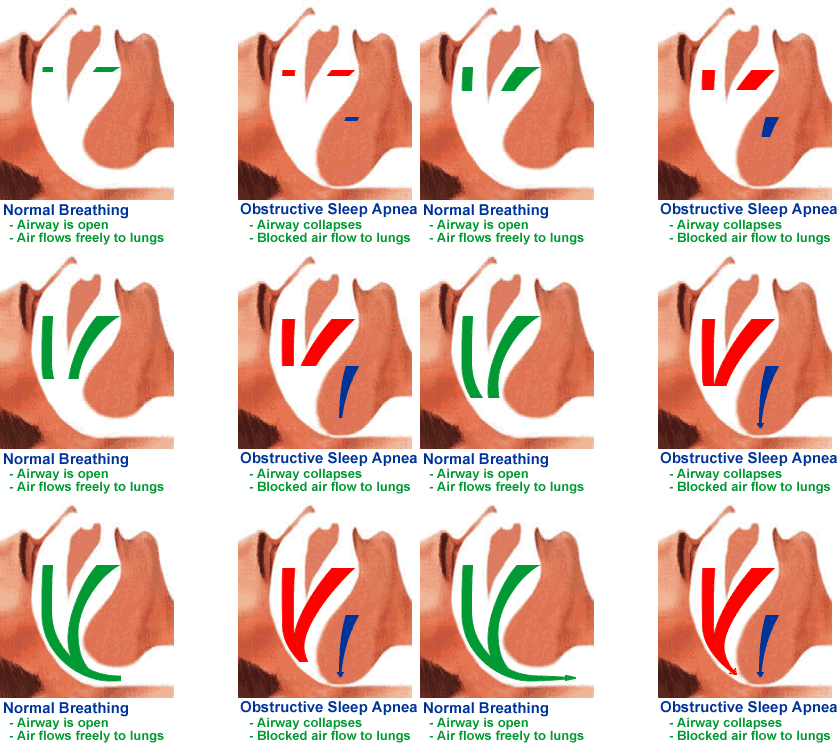
Obstructive sleep apnea (OSA) or sleep apnea for short is a sleep disorder, in which breathing stops repeatedly for a short time during sleep. “Apnea” means a pause in breathing lasting at least ten seconds. It occurs when the muscles at the back of the throat are unable to keep the airways open despite the breathing attempt of the individual.

Sleep apnea may lead to the interruption of sleep and decrease oxygen levels. In people with sleep apnea, the interruption of sleep and low oxygen levels together may lead to hypertension, cardiac diseases, emotional and memory disorders. In addition, sleep apnea increases the risks during driving due to impaired cognitive abilities.

Sleep apnea has two types of respiratory interruption:

Apnea: Apnea is considered the relaxation and collapse of the muscles and soft tissues in the throat leading to a complete obstruction of the airway and preventing airflow for 10 seconds or longer.

Hypopnea: is a partial airway obstruction, which decreases the airflow by more than 50% for 10 seconds or longer.
Obesity and Sleep Apnea

According to the estimations, 80% of patients with clinical obesity – mainly males – have also sleep apnea. However, millions of people are unaware of this condition and misinterpret the symptoms. There are several studies focused on the effects of bariatric surgery on the severity of sleep apnea. Patients who are on the waiting list for bariatric surgery show a serious predisposition to sleep apnea every hour. One year after successful surgery, the severe obstructive index scores declined to moderate levels.

 

Categories
Klinik Obezite

KO-E-057 Introduction to obesity

Surgical treatment options for obesity

Whether it is recognized as a risk factor for other diseases (World Health Organization) or as a disease itself (World Obesity Federation), obesity is a serious health problem for both affected individuals and society. Obesity is defined as an excess fat mass, which has a negative impact on health, social and psychological life of people.

In 2016, 39% of adults ≥18 years of age were overweight and 13% were obese. In the near future, almost 50% of the USA citizens will be considered obese.

Body-mass Index (BMI)

The body-mass index is a simple weight-height ratio indicator, which is widely used for the classification of overweight and obesity in adults. It is calculated by division of the weight (in kg) by the height (in m) of the individual and its unit is kg/m2. It provides the most versatile overweight and obesity measurement for the general population. It is calculated in the same way for adults of all genders and ages.

Individuals with BMI values over 30 are considered obese. The severity of obesity increases with the BMI value. People with a BMI value above 35 and concomitant obesity-related diseases or with a BMI value above 40 can be considered for obesity surgery.

In severe obesity cases, there is a surgical solution called bariatric surgery. It can be considered for individuals with the following criteria:

  • A BMI value above 30 or a BMI value equal to 35 and concomitant Type 2 diabetes mellitus.
  • Age between 18 and 60 years.
  • Absence of psychiatric disorders, which may present a risk for surgery.
  • Absence of any specific risk for surgery.

Bariatric surgery should only be considered if the person has tried and failed to lose weight for several months by using specific medical treatments (diet monitoring, physical activity, and psychotherapy). The decision for surgery should be taken following the discussions between the patient, responsible physician, surgeon, endocrinologist, dietitian, and psychologist or psychiatrist.

Weight loss goals

The goal of obesity treatment is to achieve and maintain a healthy weight. To understand and change your eating and activity habits, you should work with a team consisting of health professionals including a dietitian, psychologist or obesity specialist.

Bariatric surgery does not guarantee you a specific amount weight loss. Surgery is just a catalyst for weight loss. Achieving the weight loss targets is the patient’s own process. Success depends on the motivation of the patient and effective behavioral change.


Categories
SMS - Baria

SMS – Baria-E-057 Introduction to obesity

Whether it is considered a risk factor for other diseases (World Health Organisation ­ WHO) or a disease itself (World Obesity Federation), obesity is recognised as a serious personal and public health concern. Obesity is defined as body fat accumulation that negatively impacts a person’s health and social and psychological well-being.

The obesity rate is growing in most countries and 28% of adults in the UK are living with obesity. On a global scale, it is predicted that 18% of men and more than 21% of women in the world will obesity by 2025.


Body mass index (BMI)

Body mass index (BMI) is a simple indication of weight-for-height commonly used to classify overweight and obesity in adults. It is calculated as a person’s weight in kilograms divided by the square of their height in metres (kg/m2).

BMI provides the most useful measure of overweight and obesity for the population and is calculated the same way for both genders and for all ages of adults.

A person with a BMI of 30 or higher is considered to have obesity. As BMI increases, so does the severity of obesity. A person with a BMI higher than 35 and obesity-related conditions or a BMI higher than 40 may be a candidate for weight loss surgery.


Categories
SMS - Baria

SMS – Baria-E-067 Sleep apnea


Sleep apnea

Obstructive sleep apnea (OSA), or simply sleep apnea, is a sleep disorder in which breathing is briefly and repeatedly interrupted during sleep. “Apnea” refers to a pause in breathing that lasts for at least ten seconds. It occurs when the muscles in the back of the throat fail to keep the airway open, despite efforts to breathe.


Sleep apnea can cause fragmented sleep and low blood oxygen levels. For people with sleep apnea, the combination of disturbed sleep and oxygen starvation may lead to hypertension, heart disease and mood and memory issues. Sleep apnea also increases the risk of drowsiness while driving.


There are two types of breathing interruption characteristic to sleep apnea:

  • Apnea: This is where the muscles and soft tissues in the throat relax and collapse enough to cause a total blockage of the airway. When the airflow is blocked for 10 seconds or more, this is considered apnea.
  • Hypopnea: This is a partial blockage of the airway resulting in an airflow reduction of greater than 50% for 10 seconds or more.


Obesity and sleep apnea

It is estimated that 80% of people living with obesity, particularly men, have sleep apnea. However, millions are unaware of their symptoms and may misinterpret them as something else.

Studies have been done on how bariatric surgery impacts sleep apnea. Patients on a waitlist for bariatric surgery showed a tendency towards severe sleep apnea. One year after successful surgery, the patients’ obstructive index dropped from severe to moderate.


CPAP therapy

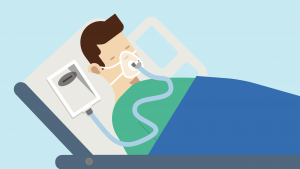
CPAP therapy is the most common and effective treatment for sleep apnea. If you have sleep apnea, proper treatment is important to reduce complications during your hospital stay. Start your CPAP therapy as soon as possible to get a more restful sleep, have more energy during the day and improve your surgery outcome. If you used a CPAP before surgery, you will find that less pressure is required after weight loss, as there is less restriction of the airway.

It is possible to lose enough weight to eliminate the need for CPAP therapy, however, this is not the norm. Once you have reached your post-bariatric surgery weight loss goal, a repeat sleep study should be conducted to assess the severity of your sleep apnea and whether you still need to use a CPAP.

The first treatment option for sleep apnea is CPAP therapy.