
Body mass index (BMI) is a measure of body fat based on your weight in relation to your height.
It is calculated by dividing your weight in by the square of your height. It is calculated by dividing your weight by the square of your height.
You can use either metric units (kilograms and metres) or imperial/US measurements (stones and feet), just don’t mix the unit types.

Although it is not perfect for everyone; BMI is a simple, reasonable indicator of body fat for both adults and children and is calculated the same way for men and women over the age of 20.
Here is the table to classify your BMI:
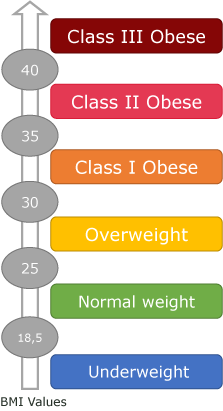
Being overweight or obese is a risk factor for the development of all cardiovascular diseases, including aortic stenosis.
If your BMI score indicates that you are overweight, or obese, consider taking measures to get healthier and lose excess weight. To start you can read the “Eating healthily” and “Physical activity” modules.
Ask your general practitioner or healthcare team about support and resources that are available to you in your area.