Categories
Klinik Obezite

KO-E-020 Eating after surgery

Healthy diet after surgery

Especially in the first 8 weeks after surgery, you should change your eating habits to avoid pain, vomiting and wound dehiscence in certain conditions and of course lose weight.

Changing eating habits may also help to prevent gastric obstructions. Swallowing large bites may hinder the passage of food through the intestines. To decrease the risk of intestinal obstruction, it is important that you eat slowly and swallow after good chewing. Your new slogan should be: “slow, small, moist and easy”.

Stop eating when you are full


Just one more spoon may lead to vomiting and stretching of your stomach wall. Focus on the signals of your body not the food on your dish. The signs of satiety may be different from the signs before surgery. Some signs – even though less obvious – showing that your stomach is about to be full are: Pressure or feeling of fullness just under your chest cage in the middle of your abdomen.

  • Nausea, vomiting or heartburn. A few minutes after you are really full, you start to feel satiety. You may try the following to find the right portion size: Measure 30 cc of water and drink it and wait a couple of minutes. If you feel full with this volume and you are comfortable, measue your meals similar to this volume. This will prevent the dilatation of your stomach sac and the emergence of discomfort due to overeating.

Tips for general mealtimes

  • Take 30-45 minutes for each meal. Take your time to chew your bite well. If you use a dental plate, you have to eat purees or soft foods. Learn to eat more slowly and consciously to allow your body to feel satiety and digest food better. If you eat too fast, you may overeat and not chew sufficiently, and this may cause vomiting.
  • Explain to your friends and family why you should eat slowly: Thus, they will not expect you to eat faster.
  • Take small bites. You may use a saucer as a visual aid instead of a regular plate for portion control.
  • You can use small forks and spoons to determine the correct portion.
  • Only eat at mealtimes recommended by your health team. “Snacks” between meals, which are not recommended by your health team, or eating small “snacks” here and there will have a negative impact on your weight loss process and prevents you reach your targeted weight.
  • Do not consume fluid while eating solid food. Do not drink fluids 30-45 minutes before and after solid food intake. Taking liquid and solid food together may cause nausea and push food faster through the stomach and lead to overeating.
  • Just eat the best food. After all, if you must eat less then eat the best, isn’t it? 

What you have to eat after surgery

Proteins

Proteins are essential for your muscles, organs, heart, and brain. Protein is necessary for the repair and regeneration of worn or damaged tissues. In addition, proteins help to fight infections.

A small stomach sac reduces the gastric capacity to a small volume so that protein-containing food should be consumed carefully in every meal. Nevertheless, taking proteins adequate to manage body functions is critical.

The minimum daily protein intake should be at least 60 g in females and 80 g in males.

In the first 6 months, your target should be at least 60 g per day. After three weeks, if you have not taken enough protein, your body will remove protein from your muscles, which are a protein source themselves. This will lead to nausea and fatigue.

In the beginning, it is easy to follow how much protein you are taking when you are consuming protein drinks. Thereafter, while you start to eat normal food, it may be more difficult to follow your protein intake. Use the food labels as a guide. If you want to add drinks or protein bars to liquid protein mixtures, be careful. These types of products contain high amounts of sugar and calories and have a bad taste.

In certain cases, your dietitian may recommend taking more protein.

Vitamins

After bariatric surgery, the created small stomach sac will not allow you to eat enough for an adequate nutrition. In addition, malabsorption as an adverse effect of surgery reduces the capacity of the body to process vitamins and minerals. To get enough vitamins, in line with the recommendations of your health team you have to take a high-dose multivitamin and mineral supplement every day for the rest of your life. For instance, you may need to take the following supplements:

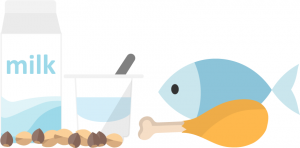
B12: B12 deficiency may develop very fast, but there are few symptoms despite its serious risks. Animal products (meat, milk, fish, poultry) contain high amounts of B12. Let your vitamin levels be checked regularly by your health team.

Calcium: We recommend that you take calcium supplements every day. Calcium is essential for bones, teeth, and neural conduction. Many individuals do not get enough calcium in their diet.

Iron: Many patients, especially females should take iron supplements to maintain an adequate iron depot and prevent iron deficiency anemia. Iron exists in many different forms. The most common form may lead to constipation. Ferrous fumarate may cause less constipation.

Additional vitamin supplements can be prescribed according to your needs. Other medications will be prescribed by your health team.

Patients who have undergone weight-loss surgery and still have a gallbladder may need to take certain medications during the period of greatest weight loss to minimize the risk of gallstone formation. Consult your surgeon to learn whether this treatment is necessary for you or not.

Liquids

You should drink 1,5-2 liters of water between meals. Among the recommended drinks you will find water, unsweetened, low-calorie, and noncarbonated beverages.

  • Avoid carbonated beverages: Following swallowing, a cold fluid warms up and releases gas, which stretches and consequently expands the stomach sac. This creates an undesired tension and causes the anastomosis to stretch.
  • Do not drink fluids 30 to 45 minutes before and after meals, as it may stretch the stomach sac and provoke vomiting.
  • Drink fluids in slow and careful sips.
  • Drink small sips regularly during the day to avoid dehydration.
  • High-calorie drinks like milkshakes, carbonated water and liquors are not allowed. High-calorie drinks usually have poor nutritional value and contain simple sugars.

NOTE: If the color of your urine is dark or you have a dry mouth, it means that you are not drinking enough fluids.
 

Categories
SMS - Baria

SMS – Baria-E-020 Eating after surgery

Maintaining a healthy diet after surgery

After surgery is when the real work starts. You will need to change your eating habits to avoid pain and vomiting, rupture of staple lines and, of course, to achieve your weight loss goals.

Changing your eating habits can also help prevent stomach obstruction. Swallowing food in pieces that are too big can make it difficult from the foods to pass into the intestine. It is critical that you eat slowly and chew your food very well to lower the risk of anything becoming caught. Your new motto should be: “slow, small, moist and easy”.

Stop eating as soon as you are full

Overeating even one spoonful can cause you to vomit and lead to harmful stretching of your stomach pouch. Pay attention to your body’s signals, not to the food left on your plate. Indications of fullness may not feel the same as before surgery. Here are some not-so-obvious signs that your stomach pouch is nearly full:

  • A feeling of pressure or fullness in the centre of your abdomen, just below your rib cage.
  • A feeling of nausea, regurgitation or heartburn. You may have a feeling of satiety several minutes after you are actually full. If your pouch is 30 cc, you can put 30 cc in it, and you will not feel full for about 5 minutes. To help you find the right portion size, try the following: Measure 30 cc of water, drink it and wait for a few minutes. If you feel full with this amount and are comfortable, measure this amount of food for each meal. This will prevent stretching of your stomach pouch and the discomfort caused by overeating.

After your surgery, it is easy to accidentally overeat at parties – especially when you are having fun and involved in conversations. It is also easy to nibble beyond fullness. Nibbling is a no-go after surgery, as you may find yourself eating tiny amounts all day long. We suggest making ‘party eating’ one of your meals for the day. Other tips for ‘party eating’ include:

  • Never snack directly from a communal bowl, as it makes portions harder to estimate. Instead, place a portion of the food on a small plate, and take only the amount food you are planning to eat. Remember, you cannot eat more than a small child’s portion now.
  • Take time to socialise more, have fun and enjoy the people at the party. Learn to focus on other things besides the food. Over time, will hopefully feel a sense of freedom from the drive to eat – use this opportunity to find new focus and enjoyments in life.

General mealtime tips

  • Set aside 30 to 45 minutes for each meal. Chew each bite of food many times. If you wear dentures, which don’t chew as well, it may be necessary to stick to ground or soft foods. Learn to eat slowly and deliberately, to allow your body to feel the fullness and digest the food better. When you eat too fast, there is a greater risk of overeating and of not chewing your food well enough, which could cause vomiting.
  • Explain to friends and family why you must eat slowly so they don’t urge you to eat faster.
  • Take small bites of food. Try using a saucer instead of a plate to help with portion control.
  • Use small utensils to help you identify the right portion.
  • Pay attention to taste. Learn how to savour your food. You may find that your tastebuds have changed after surgery.
  • Eat only at mealtimes as suggested by your health care team. Between-meal snacking or ‘nibbling’ on small amounts of food when not recommended by your health care team can sabotage your weight loss efforts.
  • Avoid drinking liquids when eating solid foods. Liquids should be avoided for a period of 30 to 45 minutes before and 30 to 45 minutes after eating solid foods. Combining liquids and solids may cause nausea and may push foods through the stomach pouch faster, potentially causing you to eat more.
  • Eat high-quality, fresh and all-natural foods. Fresh foods are higher in nutrients and more flavourful.

What to eat after surgery

Proteins

Protein is essential for your muscles as well as for your heart, brain and other organs. Our bodies require a constant supply of protein to repair and replace tissue that becomes worn out or damaged. Protein also helps fight infection.

Because your new stomach pouch has a very small capacity, it is important to eat high-protein foods with every meal to ensure your body gets enough protein to maintain itself.

Eat at least 60 grams of protein a day

A daily intake of at least 60 grams of protein should be the goal for the first 6 months. If you do not take in enough protein, after three weeks, your body will start to break down its own source of protein: muscle. This will cause you to feel nauseated and weak.

In the early days after your surgery, when you are drinking protein drinks, it is easy to keep track of how much protein you are consuming. Later, however, when you are eating regular food, it can be a bit more difficult. Use nutrition labels as your guide. Be careful with protein shakes, drinks and bars, as they tend to be high in sugar and calories.

In some cases, your dietitian may advise you to consume more protein.

Supplements

After bariatric surgery, the small stomach pouch does not allow you to eat enough to get all the nutrients you need through food alone. Moreover, the malabsorptive element of bariatric surgery decreases the body’s ability to process vitamins and minerals. To ensure you get enough nutrients, you will need to take multivitamin and mineral supplements daily for the rest of your life. Your health care team will tell exactly which supplements you need. Typically, they will prescribe some combination of the following: 

Vitamin B12: B12 deficiency can develop quickly, with little warning, and can be very dangerous. Food sources containing B12 include all types of animal products (meat, fish, poultry, dairy, eggs). Take care to have your vitamin levels checked regularly by your health care team.

Calcium: You will need to take a calcium supplement daily. Calcium is necessary for healthy bones, teeth and nerve transmission. With the reduced volume of food you can eat, it will not be possible to get enough calcium through diet alone.

Iron: Many patients, particularly women, will require an iron supplement to maintain adequate iron stores and prevent iron deficiency and anaemia. Iron is available in many different forms. Some forms can cause constipation. Consult your health care team regarding the type of iron supplement that is right for you.

Multivitamin complex: A multivitamin complex may be prescribed according to your needs.

Gallbladder medication: Bariatric surgery patients who still have their gallbladder may need to take specific medications during the period of maximum weight loss to minimise the risk of developing gallstones. Ask your health care team if this treatment is necessary for you.

Liquids

Drink 1.5 to 2 litres of still water per day between meals. (Increase this amount by 20% if you are sweating.) In addition to water, you can drink unsweetened, low-calorie and non-carbonated drinks. Juices are high in calories, provoke dumping syndrome (check in “my condition”/”caues and risk factors”)  and provide very little nutritional value. Here are some tips:

  • Avoid carbonated beverages: When a cold carbonated beverage is consumed, it warms and releases gases, distending the stomach pouch and causing harmful stretching. This can cause discomfort and vomiting.
  • Do not drink 30 to 45 minutes before or after meals to keep the stomach pouch from stretching and to prevent vomiting.
  • Sip slowly and carefully.
  • Sip liquids regularly all day long to prevent dehydration.
  • Eliminate high-calorie drinks such as milkshakes, soda, alcoholic beverages and juices. High- calorie beverages tend to be low in nutritional value and contain simple sugars. They are also quickly absorbed and may cause dumping syndrome. 

NOTE: If your urine is dark or your mouth is dry, you are not getting enough liquids.