Get active: Physical activity improves your health. Being active doesn’t have to mean spending hours at the gym; there are many ways to fit more activity into your daily life. For example, try getting off the bus a stop early and walking the rest of the way home or taking the stairs instead of the lift.
Don’t get thirsty: Avoid dehydration by drinking still water regularly – at least 1.5 to 2 litres are recommended daily. All non-alcoholic drinks count, but still water and low-fat milk are healthier choices. Avoid soft drinks and fizzy drinks as they are high in sugar and calories, bad for your teeth and can cause discomfort and harmful stomach stretching.
Don’t skip breakfast: If you skip breakfast, you can become so hungry that you overeat or eat lunch much too quickly.
Energy balance
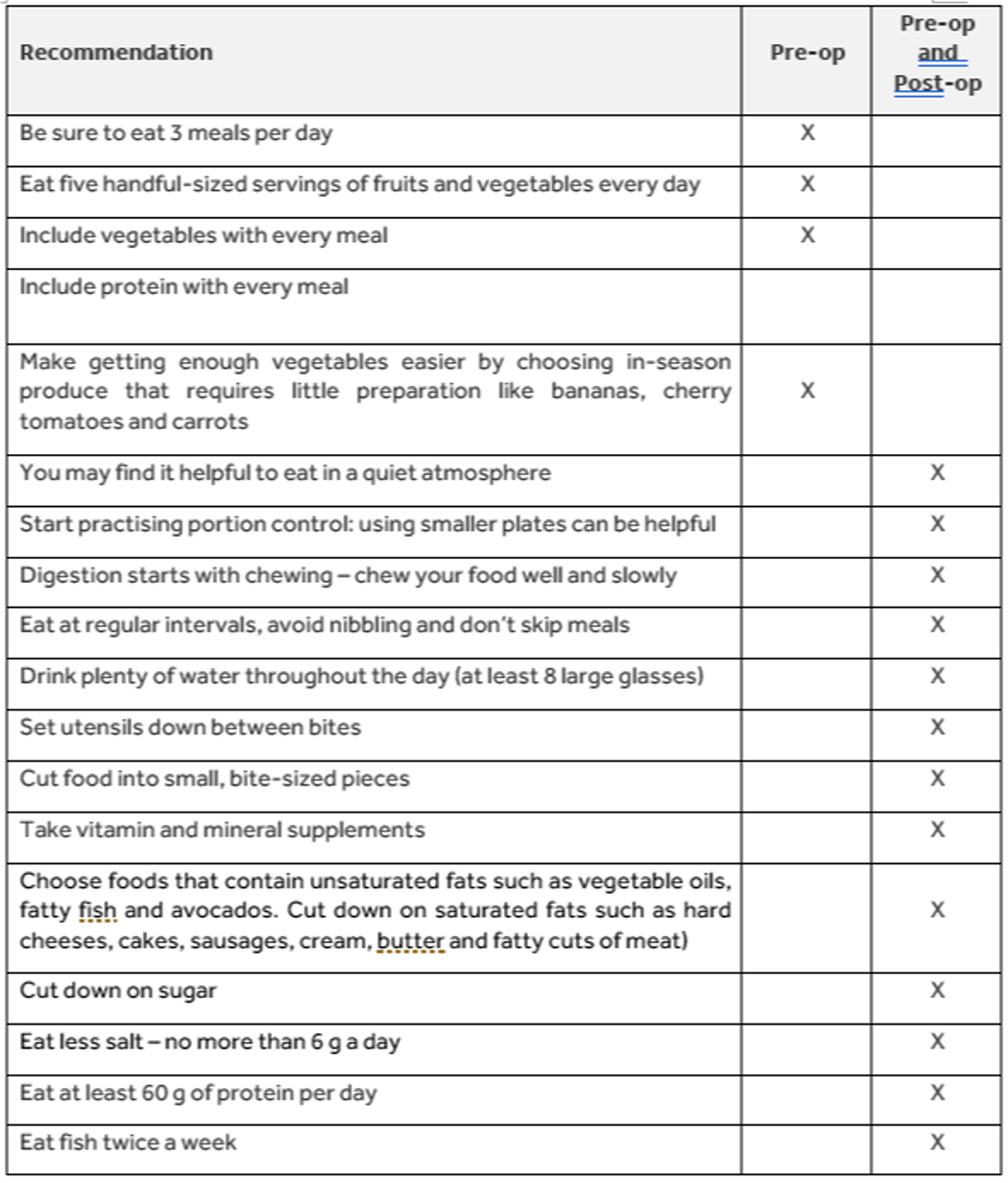
Here are some suggestions to help you achieve the right energy balance to optimise weight loss:
Energy intake before and after surgery:
After surgery, your caloric intake will drastically decrease because of the smaller size of your stomach. As part of your diet plan, it is best to start getting your body used to the reduced calorie intake before your procedure.
Drop high-calorie foods
With your health care team’s supervision,replace high-calorie foods with low-calorie alternatives.
Eat protein with every meal
Protein is essential for proper muscle and brain development. It also helps you feel fuller longer.
Eat more fish – including fatty fish
Fish is a good source of protein and contains many healthy nutrients. Aim to eat at least two portions of fish a week, including at least one portion of fatty fish. Fatty fish (such as salmon, mackerel, herring and lake trout) contain omega-3 fats.