Tips for a healthy lifestyle
Be active: Physical activity may improve your health. You do not need to exercise at a gym for hours to be active. There are many ways to add more activity into your daily life. For example, while you are returning home from work, try to get off the bus one stop earlier or to use the stairs instead of the lift.
Do not stay dehydrated: Drink water regularly to avoid dehydration. We recommend drinking at least 1.5-2 liters of water every day. All non-alcoholic drinks count. However, normal water and skimmed milk are more healthy options. Try to avoid non-alcoholic beverages and carbonated drinks, as they contain high amounts of sugar and calories and are bad for teeth.
Do not skip breakfast: A healthy breakfast is an important part of a balanced diet. A bowl of whole-grain, low-carb cornflakes with sliced fruits is a tasty and nutritional breakfast.
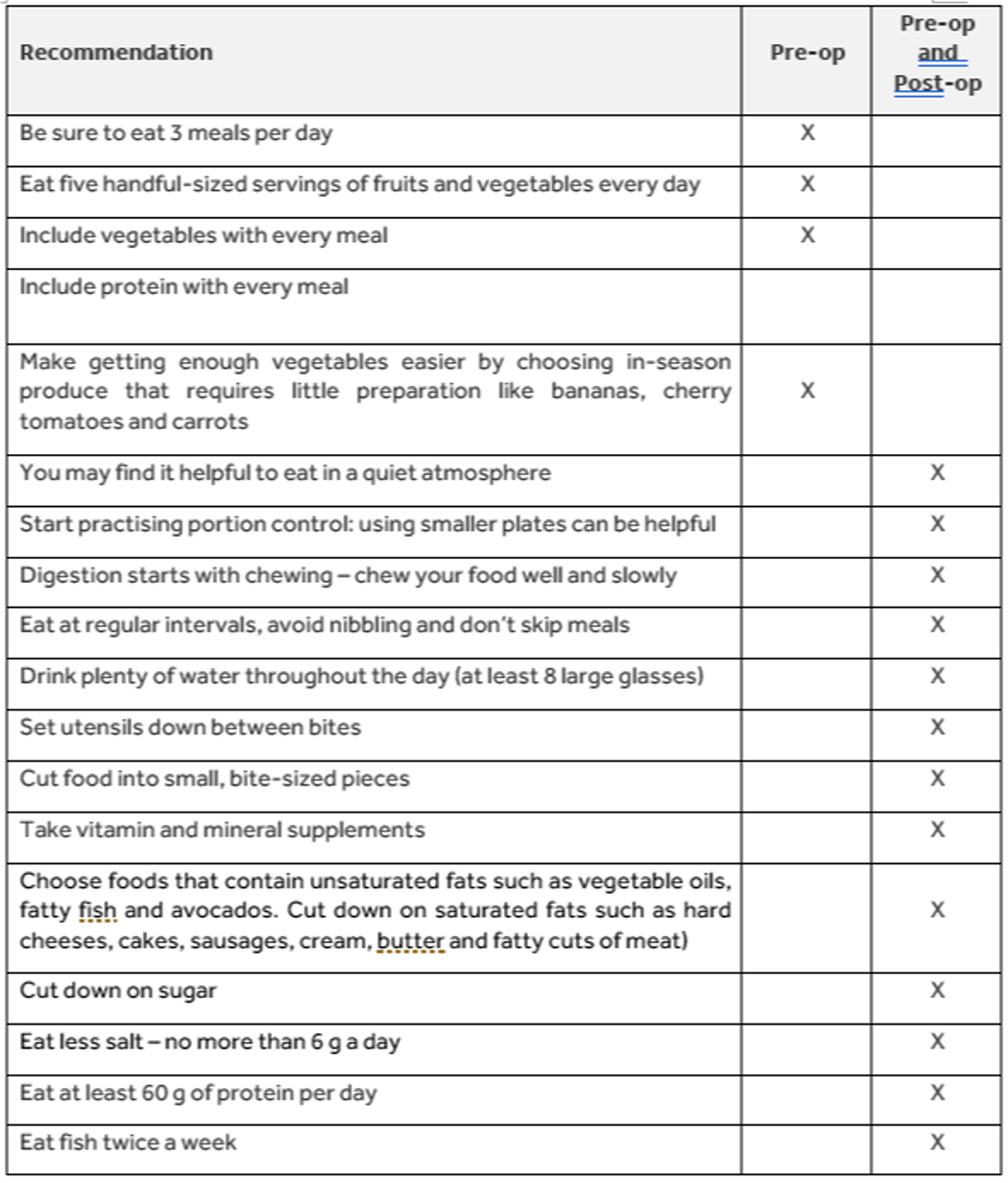
| Recommendation | Before | Before and after |
| Do not forget to eat three meals a day | x | |
| Eat the equivalent of five handfuls of fruit and vegetable every day. | X | |
| Add vegetables to every meal | X | |
| Make your vegetable intake easier by choosing seasonal foods that require little preparation, such as bananas, small tomatoes, and carrots. | X | |
| It may be useful to eat in a quiet environment. | X | |
| Start by working on portion control. Smaller plates like saucers may be useful. | X | |
| Digestion starts with chewing. Chew your bites well and slowly. | X | |
| Eat at regular intervals. Avoid snacks and do not miss meals. | X | |
| Drink plenty of water a day long (at least 8 glasses) | X | |
| Leave your fork and knife on the table between two bites. | X | |
| Cut food in small bites. | X | |
| Take vitamin and mineral supplements. | x | |
| Prefer food containing unsaturated fats like vegetable oils, fatty fish, and avocado. Avoid food containing saturated fats like ripened cheeses, cakes, sausages, cream, butter etc. | x | |
| Do not consume sugar. | x | |
| Consume less salt – maximum 6 g per day. | x | |
| Your daily diet should contain 60 g of protein for females and 80 g for males. | x | |
| Eat fish twice a week. | x | |
| OH | x |