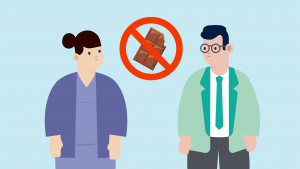
Emotional eating
Emotional eating is the tendency of people, who suffer from this condition, to respond to stressful and difficult emotions by eating.
On certain occasions, it may be acceptable to use food as an energizing snack, reward, or celebration. However, if eating becomes your primary emotional overcoming mechanism (if your first reaction is to open the refrigerator when you are feeling stressed, sad, angry, lonely, exhausted, and depressed), you will fall into an unhealthy cycle where the real feelings or problems are never dealt with.
Finding different ways for intrinsic satisfaction
Emotional hunger cannot be satisfied with eating. Eating may make you feel better at that moment but the emotions triggering eating behavior are still in place. Besides, you feel worse than before due to the consumed unnecessary calories.
If you do not know how to manage your emotions without the involvement of food, you will be not able to control your eating habits for very long. Diets often fail because they offer rational nutritional advice, which only works if you consciously control your eating habits. A diet will not work when emotions take over and you seek momentary results by eating.
Alternatives for emotional eating
You have to find other ways to satisfy your emotions to avoid emotional eating.
The following alternatives can be considered instead of emotional eating:
If you feel bad-tempered or lonesome: Call someone who always makes you feel better, play with your dog, or cat or look at your favorite photos or souvenirs.
If you are concerned: Try to get rid of negative energy by dancing to your favorite song, playing with the stress ball and going for a brisk walk.
If you are very tired: Indulge yourself with a hot cup of tea, take a bath, light a scented candle, or wrap yourself in a warm blanket.
If you are bored: Read a good book, watch a comedy, walk outdoors, or do an activity you enjoy (woodworking, guitar playing, basketball, drawing etc.).
Despite these alternatives, if you cannot overcome emotional eating, you need professional support. You can contact us and make an appointment with our psychologist.
What is an eating disorder?
Eating disorders are disorders characterized by irregular eating habits and serious anxiety or concerns about body perception. Eating disorders are usually accompanied by other diseases such as anxiety disorders, drug abuse or depression.
Some eating disorders:
Emotional eating
Binge eating disorder
Night eating syndrome
Bulimia nervosa (eating-vomiting disorder)
Anorexia nervosa (refusing eating due to weight gain phobia)
Emotional eating and eating disorder
The main difference between emotional eating and overeating is the amount of consumed food. Although there is a problem related to the control of eating drive in both cases, emotional eating is related to moderate to large amounts of food consumption, while eating disorders may be related to very small or very large amounts of food consumption.
Emotional eating may be the only symptom, or it may be a sign of an eating disorder like bulimia (eating-vomiting syndrome) or overeating disorder or other emotional diseases like depression.
If you think that you have emotional eating or the abovementioned eating disorders, you should seek psychological support for sustainable weight loss.