Categories
Klinik Obezite

KO-E-029 Introduction to my preparation journey

Introduction to my preparatory journey

During the critical months before surgery, it is very important that you understand what bariatric surgery means for your health and quality of life and how to best prepare yourself for this surgery. Every day you can collect information about how you can prepare your body for surgery and how you can gradually modify your eating and exercise habits.

The Get Ready application will help you to prepare yourself for hospitalization and guide you to what you should know before surgery.

If you feel unsure to follow the instructions of your health team and change your eating and exercise habits, there is a risk that surgery will not lead to weight loss. From the moment you learn that you are eligible for surgery, you should start to follow a healthier lifestyle including a healthier diet, being more active and limiting alcohol consumption and smoking (it is better that you stop alcohol consumption and smoking completely as the surgery date approaches). These efforts not only prepare you for a successful surgery and recovery but will also be the start of a brand-new and healthier lifestyle.


Categories
Klinik Obezite

KO-E-041 Post-bariatric reconstructive surgery

If you have lost a great amount of weight after bariatric surgery, skin sags may develop in certain places of your body. Some bariatric surgery patients prefer reconstructive surgery to remove this excess skin.

Plastic surgeons use contouring technics such as abdominal lifting to remove excess skin. These procedures are proven successful in supporting patients to restore their body shape and enjoy daily activities.

Patients should meet certain health criteria before reconstructive surgery following bariatric surgery. Please ask your family physician or surgeon whether you are a suitable candidate for reconstructive surgery. If you are not, please try to learn what you can do to improve your health condition in order to be evaluated as eligible for reconstructive surgery.

Requirements for plastic surgery:

  • A good general health condition
  • At least one year should be passed after bariatric surgery
  • The weight loss process has to be completed at least six months ago.
  • A BMI value of 25 or less is required for better short-, medium- and long-term outcomes.
  • No vitamin/mineral deficiency
  • No smoking for better wound healing
  • No active pregnancy, no pregnancy planning for the next year
  • A balanced diet and regular exercise
  • Realistic expectations


Procedures to be assessed

Depending on the amount of lost weight and the location of excess skin, you can consider one or more of the following post-bariatric reconstructive procedures:

  • Abdominoplasty: Abdominoplasty is an effective post-bariatric reconstructive procedure, which not only removes excess skin but also tightens the abdominal muscles so that a thin waistline and a flat stomach is formed. Please take into consideration that abdominoplasty leaves a long and prominent wound scar on your lower abdomen.
  • Brachioplasty: Brachioplasty starts with an incision in the lower part of the upper arm. Then, excess skin is removed to form a tightened and firm appearance. Please note that brachioplasty leaves a long wound scar starting from the upper part of your upper arm and extending to the lower part.
  • Gluteoplasty (Brazilian butt lift): The hip area commonly requires body contouring after the weight loss process. The plastic surgeon lifts and reshapes this part of the body to create smoother and tighter contours.
  • Mastopexy (Breast Lift): As the breasts consist mostly of fat tissue, they can be significantly affected by weight loss. Breast augmentation and mastopexy are two body contouring techniques, which help lift the breast line after weight loss.
  • Thigh lift: Excess skin remains in the thigh area of many patients following bariatric surgery. Thigh lift surgery may be useful for these individuals. There are many thigh lift techniques. The difference between them is the type of incision:
    • Vertical thigh lift: The incision starts from the inguinal area and extends to the inner side of the knee. Excess skin is removed from the inner side of the thigh. A wound scarring may remain after healing.
    • Medial thigh lift: is the most popular thigh lift technique. This type of surgery is ideal for individuals who have moderate fat and excess skin in the medial part of their thighs. An incision is made on the folding line of the inguinal area and the skin is tightened after the lifting process.
    • Outer thigh lift: an incision is made from the hip to the inguinal area.
    • Spiral thigh lift: is a new thigh lift procedure, during which the posterior, anterior, lateral, and medial areas of the thigh are reshaped. The incision starts just under the hip and extends towards the folding line in the inguinal area. This surgery is usually performed in patients, who need the removal of a great amount of skin and fat from related areas.


Many people want to learn whether reconstructive surgical procedures are reimbursed by health insurance or the state health system. Some procedures are reimbursed some are not.

Categories
Klinik Obezite

KO-E-043 Managing pain

Pain management

You may feel pain in the incision site or surgery site depending on the position of your body. Some patients may experience neck and shoulder pain after laparoscopy. Your comfort is important for your health team.

Although some discomfort can be experienced after every surgical intervention, pain should be kept under control for your healing process. If you feel comfortable, you will do activities like walking, deep breathing and coughing more freely. All of these are very important for quick recovery.

Some tips to help you feel more comfortable

  • If you have pain, which prevents your mobility, deep breathing, and your comfort in general, report your condition to your nurses and physicians.
  • Everybody is different; therefore, inform your nurses always how you feel. This will make it easier for your nurses to help you.
  • Make a plan ahead for pain; if you are comfortable lying down, you may still need an analgesic agent to get up and walk around.
  • Be one step ahead of your pain. Do not wait until that pain becomes worse. The analgesic agents provide the best results when they are used to prevent pain.
  • If the analgesic agents are used for a specific medical purpose like surgery, the risk of becoming dependent on them is very low.
Categories
Klinik Obezite

KO-E-047 Weight loss surgery and pregnancy

Bariatric surgery and Pregnancy

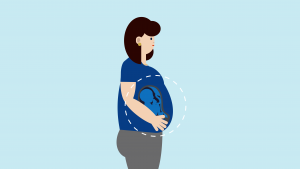
Bariatric surgery can improve your fertility status. Several studies demonstrated that women, who had obesity-related fertility problems and underwent surgery, started to ovulate regularly for the first time after many years. However, it is important to wait at least 12 months after surgery before you get pregnant and be sure that your metabolism is re-balanced.

It is safe to get pregnant 12-24 months after bariatric surgery.

Following surgery, your body passes through stressful changes and experiences serious nutritional changes, which can be a problem for a growing baby. Physicians recommend avoiding pregnancy for about 12-24 months after surgery to prevent nutritional deficiencies. 

If you become pregnant

If you plan to become pregnant after your weight is balanced following surgery, it is highly recommended that you stay under the follow-up of a multidisciplinary team. It is very important that you take multivitamins and mineral supplements and are monitored by a specialist for any nutritional deficiency. A careful evaluation of the gastrointestinal complaints and a relevant consultancy in addition to a different approach for gestational diabetes is required.

Categories
Klinik Obezite

KO-E-049 My surgery details: gastric bypass (Roux-en-Y)


Categories
Klinik Obezite

KO-E-067 Sleep apnoea

Sleep Apnea

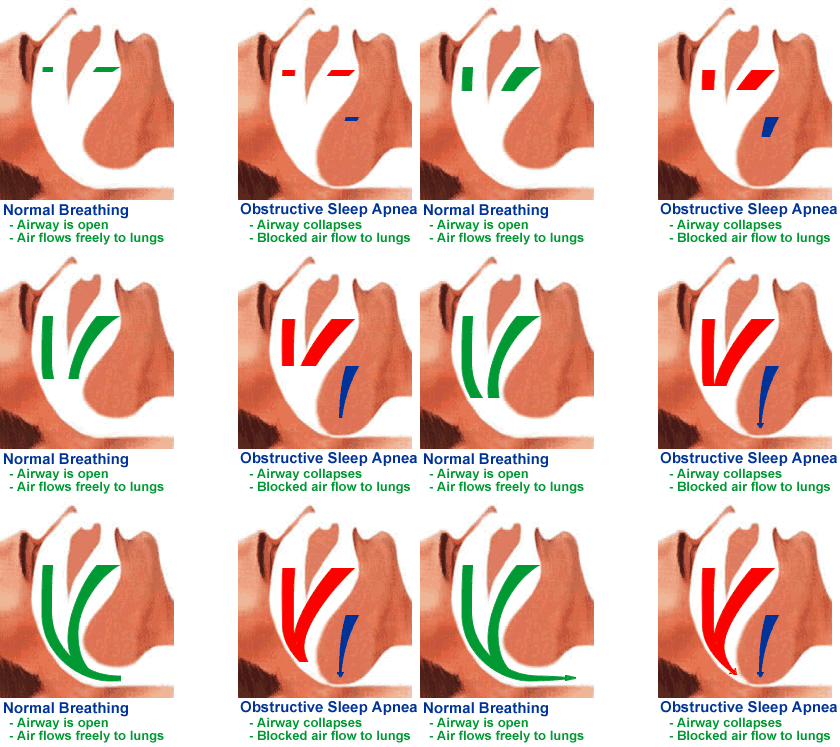
Obstructive sleep apnea (OSA) or sleep apnea for short is a sleep disorder, in which breathing stops repeatedly for a short time during sleep. “Apnea” means a pause in breathing lasting at least ten seconds. It occurs when the muscles at the back of the throat are unable to keep the airways open despite the breathing attempt of the individual.

Sleep apnea may lead to the interruption of sleep and decrease oxygen levels. In people with sleep apnea, the interruption of sleep and low oxygen levels together may lead to hypertension, cardiac diseases, emotional and memory disorders. In addition, sleep apnea increases the risks during driving due to impaired cognitive abilities.

Sleep apnea has two types of respiratory interruption:

Apnea: Apnea is considered the relaxation and collapse of the muscles and soft tissues in the throat leading to a complete obstruction of the airway and preventing airflow for 10 seconds or longer.

Hypopnea: is a partial airway obstruction, which decreases the airflow by more than 50% for 10 seconds or longer.

Obesity and Sleep Apnea

According to the estimations, 80% of patients with clinical obesity – mainly males – have also sleep apnea. However, millions of people are unaware of this condition and misinterpret the symptoms. There are several studies focused on the effects of bariatric surgery on the severity of sleep apnea. Patients who are on the waiting list for bariatric surgery show a serious predisposition to sleep apnea every hour. One year after successful surgery, the severe obstructive index scores declined to moderate levels.


Categories
Klinik Obezite

KO-E-057 Introduction to obesity

Surgical treatment options for obesity

Whether it is recognized as a risk factor for other diseases (World Health Organization) or as a disease itself (World Obesity Federation), obesity is a serious health problem for both affected individuals and society. Obesity is defined as an excess fat mass, which has a negative impact on health, social and psychological life of people.

In 2016, 39% of adults ≥18 years of age were overweight and 13% were obese. In the near future, almost 50% of the USA citizens will be considered obese.

Body-mass Index (BMI)

The body-mass index is a simple weight-height ratio indicator, which is widely used for the classification of overweight and obesity in adults. It is calculated by division of the weight (in kg) by the height (in m) of the individual and its unit is kg/m2. It provides the most versatile overweight and obesity measurement for the general population. It is calculated in the same way for adults of all genders and ages.

Individuals with BMI values over 30 are considered obese. The severity of obesity increases with the BMI value. People with a BMI value above 35 and concomitant obesity-related diseases or with a BMI value above 40 can be considered for obesity surgery.

In severe obesity cases, there is a surgical solution called bariatric surgery. It can be considered for individuals with the following criteria:

  • A BMI value above 30 or a BMI value equal to 35 and concomitant Type 2 diabetes mellitus.
  • Age between 18 and 60 years.
  • Absence of psychiatric disorders, which may present a risk for surgery.
  • Absence of any specific risk for surgery.

Bariatric surgery should only be considered if the person has tried and failed to lose weight for several months by using specific medical treatments (diet monitoring, physical activity, and psychotherapy). The decision for surgery should be taken following the discussions between the patient, responsible physician, surgeon, endocrinologist, dietitian, and psychologist or psychiatrist.

Weight loss goals

The goal of obesity treatment is to achieve and maintain a healthy weight. To understand and change your eating and activity habits, you should work with a team consisting of health professionals including a dietitian, psychologist or obesity specialist.

Bariatric surgery does not guarantee you a specific amount weight loss. Surgery is just a catalyst for weight loss. Achieving the weight loss targets is the patient’s own process. Success depends on the motivation of the patient and effective behavioral change.


Categories
Klinik Obezite

KO-E-022 Eating after surgery FAQ

Eating after surgery FAQs

Which vitamins and minerals should I take after weight-loss surgery?

Multivitamins, vitamin D, calcium and in most cases iron and/or vitamin B12. In some cases, depending on the degree of malabsorption, vitamin A may be added to the diet. Chewable forms are recommended at least at the early stage after surgery. Be sure that you are taking adult supplements, do not take supplements designed for children. Ask your dietitian whether you should take vitamin A.

How much protein do I need per day?

60-80 g/day is recommended for most patients. However, some individuals need more protein depending on their response to surgery or the type of surgery. Your dietitian will give you further information.

How should I take my protein? What can I do if I am a vegetarian?

Meat, egg, dairy, and beans are common sources of protein. Soybean, brown rice, and protein extracts obtained from whey are meat supplements, which are preferred by vegetarians and sold commonly in the markets. Liquid protein mixtures or protein bars may be additional protein sources to meet your needs. Your dietitian can inform you about the protein sources.

In order to be sure that you are taking enough protein, it may be useful to calculate your daily protein intake. As you become more capable of digesting normal food, you will start to meet your protein need more and more with normal food and your need for supplements will decrease.

Should I avoid caffeine after bariatric surgery?

It was demonstrated that caffeinated drinks are as good as other drinks for your fluid requirements. Nonetheless, it is a good idea to avoid caffeine in the first 30 days after surgery, when your stomach is extremely sensitive. Then you may consult your surgeon or dietitian about caffeine consumption. Do not forget that caffeine usually comes with sugared, high-calorie drinks. Therefore, make sure that you make purposeful choices.

Why is fluid intake important?

Dehydration occurs when your body does not get enough fluid to function properly. Carry one bottle of water even if you are not at home. Remind yourself to drink water even if you are not thirsty.

Your goal is to drink at least 2 liters of water per day. If your urine is light-colored and you urinate several times a day, you are getting enough fluids. Thirst, headache, hard stool, dizziness while sitting or standing or dark-colored urine are among the symptoms of dehydration. If you cannot get enough fluid to meet your needs, contact your surgeon.


What happens if I do not take enough protein after surgery?

The body needs additional protein to preserve muscle mass during fast weight-loss periods. If you cannot take enough protein with the diet, your body starts to remove protein from your muscles, and you may be weakened. Furthermore, protein is essential for the sustainability of your metabolism.

Other

Bariatric surgery is a serious physical intervention. When you return home after surgery, you need to take special care of yourself and follow some strict rules. Some of the frequently asked questions you need to know when you return home after surgery, are given below.

About the symptoms and precautions FAQs

Will my hair fall out?

During fast weight-loss periods, calorie intake is much less than the needs of the body and protein intake is rather limited. You may also experience vitamin and mineral deficiencies like iron, zinc, or vitamin B. Your body gives several reactions to these deficiencies and hair loss and hair thinning are common. This transient side effect improves spontaneously with a better diet and balanced weight. Hair loss occurs between 3 and 9 months after surgery. Do not worry. You can minimize your hair loss by taking your daily multivitamin supplement and at least 60 g of protein per day.

Why should I quit smoking and alcohol consumption after surgery?

Smoking or electronic cigarettes or tobacco chewing decrease blood perfusion to the tissues and delay healing. In addition, smoking increases the risk of ulceration in the stomach sac, causes harm to every organ and is related to several other disease such as clotting, marginal ulcers after gastric bypass, and stroke. Try to stop smoking after surgery. We hope this will be an opportunity to quit smoking for the rest of your life.

May I get pregnant after surgery?

After your weight loss process is balanced, you may start to plan your pregnancy. However, you must not get pregnant in the first 12-24 months following surgery (follow the recommendations of your clinic). This measures are necessary to protect the health and safety of both you and your baby. While you are planning to get pregnant, undergo health control to see your vitamin and mineral status and optimize your food intake.

How should I behave about sexuality after surgery?

Two weeks after surgery you may carefully consider sexuality. During this process, the abdominal regions should be protected and not exposed to excessive pressure.

               

Categories
Klinik Obezite

KO-E-018 Emotional eating

Emotional eating

Emotional eating is the tendency of people, who suffer from this condition, to respond to stressful and difficult emotions by eating.

On certain occasions, it may be acceptable to use food as an energizing snack, reward, or celebration. However, if eating becomes your primary emotional overcoming mechanism (if your first reaction is to open the refrigerator when you are feeling stressed, sad, angry, lonely, exhausted, and depressed), you will fall into an unhealthy cycle where the real feelings or problems are never dealt with.

Finding different ways for intrinsic satisfaction

Emotional hunger cannot be satisfied with eating. Eating may make you feel better at that moment but the emotions triggering eating behavior are still in place. Besides, you feel worse than before due to the consumed unnecessary calories.

If you do not know how to manage your emotions without the involvement of food, you will be not able to control your eating habits for very long. Diets often fail because they offer rational nutritional advice, which only works if you consciously control your eating habits. A diet will not work when emotions take over and you seek momentary results by eating.

Alternatives for emotional eating

You have to find other ways to satisfy your emotions to avoid emotional eating.

The following alternatives can be considered instead of emotional eating:

If you feel bad-tempered or lonesome: Call someone who always makes you feel better, play with your dog, or cat or look at your favorite photos or souvenirs.

If you are concerned: Try to get rid of negative energy by dancing to your favorite song, playing with the stress ball and going for a brisk walk.

If you are very tired: Indulge yourself with a hot cup of tea, take a bath, light a scented candle, or wrap yourself in a warm blanket.

If you are bored: Read a good book, watch a comedy, walk outdoors, or do an activity you enjoy (woodworking, guitar playing, basketball, drawing etc.).

Despite these alternatives, if you cannot overcome emotional eating, you need professional support.  You can contact us and make an appointment with our psychologist.

What is an eating disorder?

Eating disorders are disorders characterized by irregular eating habits and serious anxiety or concerns about body perception. Eating disorders are usually accompanied by other diseases such as anxiety disorders, drug abuse or depression.

Some eating disorders:

  Emotional eating

  Binge eating disorder

  Night eating syndrome

  Bulimia nervosa (eating-vomiting disorder)

  Anorexia nervosa (refusing eating due to weight gain phobia)

Emotional eating and eating disorder

The main difference between emotional eating and overeating is the amount of consumed food. Although there is a problem related to the control of eating drive in both cases, emotional eating is related to moderate to large amounts of food consumption, while eating disorders may be related to very small or very large amounts of food consumption.

Emotional eating may be the only symptom, or it may be a sign of an eating disorder like bulimia (eating-vomiting syndrome) or overeating disorder or other emotional diseases like depression.

If you think that you have emotional eating or the abovementioned eating disorders, you should seek psychological support for sustainable weight loss.


Categories
Klinik Obezite

KO-E-002 Introduction to behaviour change: My motivation

Introduction to behavioral change

Your motivational decisiveness

Bariatric surgery is just the start of your weight-loss journey. In order to maintain weight loss, you have to stick to long-term behavioral changes. This is the challenging part of your postoperative follow-up, and you may have difficulties at the beginning. However, you will find out that you do not want to go back to your unhealthy lifestyle once you start to lose weight and enjoy your new habits.

As a part of the after-surgery follow-up period, you should strictly adhere to the following:

  • An active and healthy lifestyle,
  • Making appropriate food choices and adopting the recommended eating habits,
  • Following the food, vitamin & mineral supplements requirements recommended by your health team,
  • Including physical activities and exercises in your daily routine,
  • Following the progress with your physician in line with the given instructions.