Categories
Diabetes

Diabetes – What is a healthy weight? Calculating your BMI

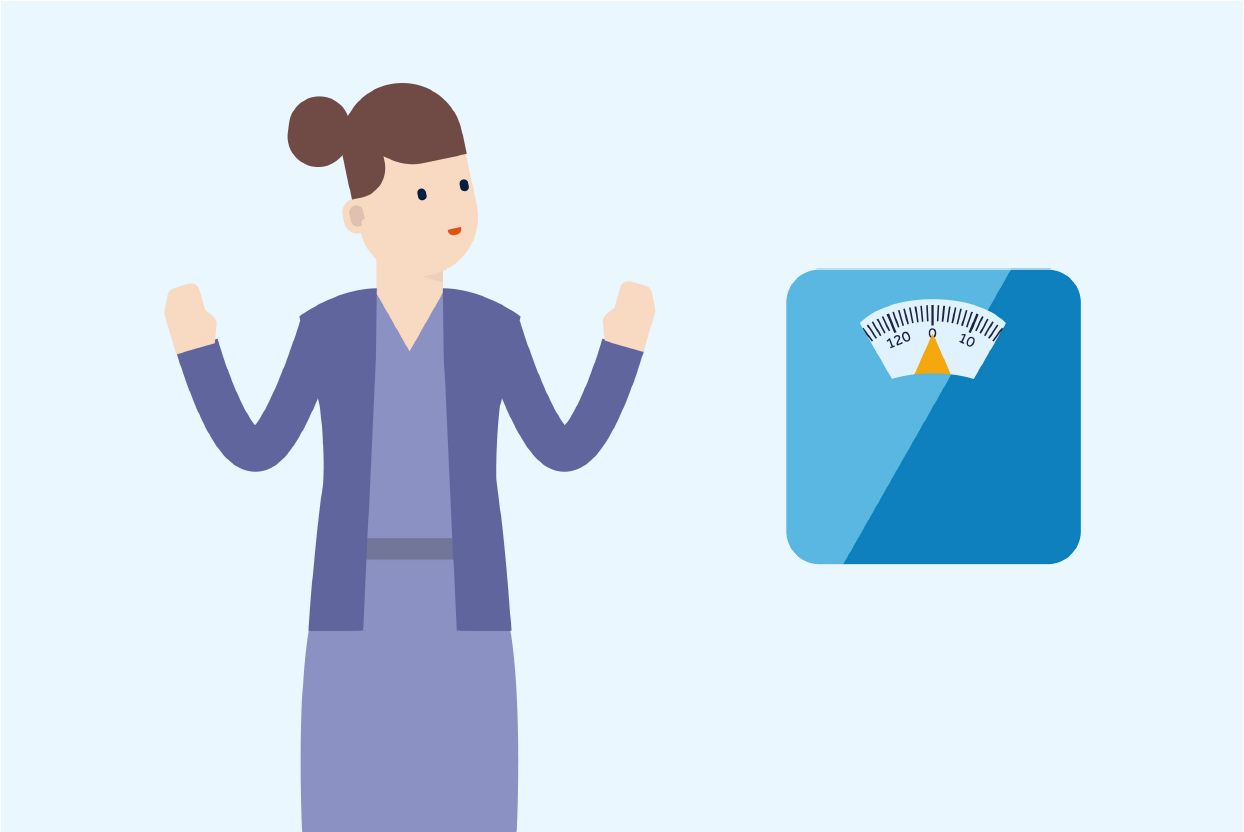
Body mass index (BMI) is a measure of body fat based on your weight in relation to your height.

It is calculated by dividing your weight in by the square of your height. It is calculated by dividing your weight by the square of your height.

You can use either metric units (kilograms and metres) or imperial/US measurements (stones and feet), just don’t mix the unit types.

Although it is not perfect for everyone; BMI is a simple, reasonable indicator of body fat for both adults and children and is calculated the same way for men and women over the age of 20.

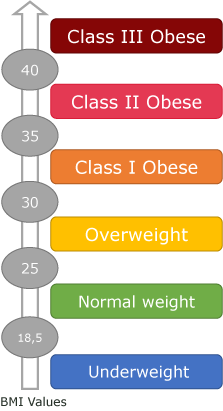
Here is the table to classify your BMI:

Being overweight or obese is a risk factor for the development of all cardiovascular diseases, including aortic stenosis.

If your BMI score indicates that you are overweight, or obese, consider taking measures to get healthier and lose excess weight. To start you can read the Eating healthily and Physical activity modules.

Ask your general practitioner or healthcare team about support and resources that are available to you in your area.

Categories
Akeso

Baria-E-002 Introduction to behaviour change: My motivation

Bariatric surgery is only the beginning of your weight loss journey. To achieve sustainable weight loss, you will need to commit to long-term behaviour changes. This is the hard work that your post-surgery follow-up involves – and it may be difficult at first. But you will see that over time, as you begin to shed the weight and enjoy your new-found habits, you will never want to go back to your unhealthy lifestyle.

As part of your post-surgery follow-up, you will need to commit to:

  • An active, healthy lifestyle
  • Making appropriate food choices and adopting the recommended eating habits
  • Complying with the nutritional, vitamin, and mineral supplement requirements recommended by your health care team
  • Incorporating physical activity and exercise into your routine
  • Following up with your physician as directed

LOCAL INPUT – Insert motivational contract bariatric surgery if available

Categories
Schüchtermann Klinik SSK

SSK-E-xx Daily Living with a VAD

You can live an active, fulfilling life with an LVAD – doing things you enjoy and spending time with the people you love.


Your doctor will provide information on all aspects of preparing for surgery and recovering from surgery, with a clear plan for leaving the hospital and setting follow-up appointments.


Leaving the hospital and returning home can feel challenging. Your doctor will make sure you and your family are fully prepared and feeling secure. They will create a safe plan in the event of an emergency.


Don’t hesitate to ask your doctor about any question you may have about living with an LVAD, washing and showering, activities you can perform or returning to work for example.


Living with an LVAD includes managing the equipment that runs the pump and care for the driveline cable exit site. You may have to make some changes to account for the driveline and external equipment. It’s important that the driveline doesn’t get pulled, caught or kinked.

Your doctor will make sure you are fully informed and understand how to manage the equipment.


It may take time for you to become comfortable living with an LVAD.

Be patient with yourself.

Categories
SMS - Baria

SMS – Baria-E-098 My daily activity programme – phase 1

Daily activities and exercising before weight loss surgery is, of course, important for your health. But it is also a first step towards preparing your mindset for what is to come after surgery.

Being physically active helps keep your heart and lungs healthy, it ensures healthy bone density and joint mobility, and it alleviates stress, anxiety, and depression. Fortunately, it doesn’t take much to make a noticeable difference. Start by changing position frequently and generally moving more.

Here’s a daily activity regimen you might follow over the next few weeks.


Daily activities

Make sure to perform normal daily activities such as washing up, cooking for yourself, grocery shopping, and so forth.

There are plenty of ways to incorporate physical activity into your everyday life. If you can, take the stairs instead of the elevator and park your car a little further away from the store and walk the rest of the way. Do things that keep you moving and change positions at least once every hour.

Categories
SMS - Baria

SMS – Baria-E-025 Post-op nutrition protocol: general suggestions

During your hospitalisation, your healthcare team explained to you about the nutrition programme you will need to follow, both in the coming months and for the rest of your life. Adhering to this programme is the key to weight loss success. It’s important that you stick to the programme to ensure that you get the right nutrients and to avoid possible adverse effects.

Your patient engagement programme will keep track of everything you need to remember. And if you have any questions, please don’t hesitate to contact your healthcare team.  

Here are some helpful tips for modifying your behaviour to keep you on the path to better health.

  • Eat very slowly – an easy trick is to put your fork down between each bite.
  • Chew thoroughly – this is very important to prevent food from blocking the stomach opening.
  • Set aside more time for meals – up to 45 minutes to eat a small amount.
  • Stop eating as soon as you feel full. Do not force yourself to finish a portion or exceed the amount tolerated by your stomach.
  • Drink fluids regularly between meals – at least 2 litres per day. Stop drinking 30 minutes before starting a meal and resume 30 minutes after finishing a meal.
  • The carbonation in soft drinks and sparkling water can upset your stomach. Plain water or warm tea are best. Or add fruit slices or some mint for a bit of flavour.
  • Avoid alcohol for the first six months after surgery, especially carbonated drinks and sugary mixes.
  • Eat 6 to 7 small meals throughout the day, making sure to plan snacks between the main meals.
  • Never skip a meal.
  • Avoid all things sweet: sugar, honey, sweets, chocolate, jam, fruit pastes, sweet compotes, cookies, fruit syrups, commercial desserts, industrial beverages, ice cream, etc.
  • Avoid hidden fats: pastries, popcorn, crisps, French fries, etc.
  • Avoid high-fat foods even those generally considered healthy: mayonnaise, cream, bacon, cold cuts, dried fruits, avocado, olives, etc.
  • Avoid raw, crunchy vegetables (carrots, celery, etc.) in large quantities as they can easily block the stomach opening.
Categories
SMS - Baria

SMS – Baria-E-024 Nutrition plan after surgery

LOCAL INPUT: Hospital specific nutritional plan

Categories
SMS - Baria

SMS – Baria-E-018 Emotional eating

Emotional eating is a common response to stressful, difficult feelings by eating – even when you’re not actually hungry.

Using food occasionally as a pick-me-up, a reward, or to celebrate is perfectly alright. But when eating becomes a primary emotional coping mechanism – when your first impulse is to open the refrigerator whenever you’re stressed, upset, angry, lonely, exhausted or bored – this can trigger an unhealthy cycle which may alleviate in the short term, but does not address the underlying feelings or problems.

Finding other fulfilment

Emotional hunger can’t be met with food. Eating may feel good in the moment, but eating does not make the feelings go away. And it can leave you feeling even worse, for instance because of the guilt associated with this type of behaviour.

It is important to learn to manage your emotions in a way that doesn’t involve food in order to sustainably maintain healthy eating habits. One reason why diets so often fail is because they offer logical nutritional advice without addressing the issues that trigger emotional eating.

Alternatives to emotional eating

The trick to stopping emotional eating is to find other ways to achieve emotional fulfilment. These might include:

Feeling out or sorts or lonely? Call someone who always makes you feel better, play with your dog or cat or look at a favourite photo or cherished memento.

Feeling anxious? Release nervous energy by dancing to your favourite song, squeezing a stress ball or taking a brisk walk.

If you’re exhausted? Treat yourself to a hot cup of tea, take a bath, light some scented candles or wrap yourself in a warm blanket.

Feeling bored? Read a good book, watch a comedy show, explore the outdoors or turn to an activity you enjoy.

If you need extra support, speak with your GP or psychologist.

What is an eating disorder?

Eating disorders are characterised by irregular eating habits and severe distress or concern about body image. Eating disorders commonly coexist with other conditions, such as anxiety disorders, substance abuse or depression.

Emotional eating can be a sign of a more serious condition.


Categories
SMS - Baria

SMS – Baria-E-023 Smart healthy shopping

Good nutrition starts with smart choices in the grocery store. Cooking healthy meals is a challenge if you don’t have the right ingredients in your kitchen, but sometimes it can be difficult to know exactly what to buy at the supermarket. With a little guidance, healthy choices are easy to find in any supermarket.

Aim for variety
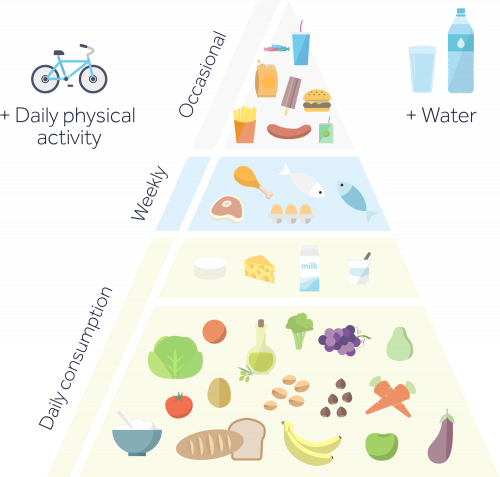
Most of us tend to eat the same foods over and over again. But variety really is the spice of life – and the cornerstone of good health. The Food Pyramid shows you how you can vary your foods in a way that ensures good nutrition.

Planning your grocery list
When planning your grocery list, consult the guidelines of the Food Pyramid (put the link to the module with food pyramid) and reach out to your dietitian for advice on which products to include and which to potentially avoid. Here are some shopping tips to help ensure your kitchen is stocked with the right ingredients.

  • The process starts before you leave for the grocery store. Before you set out for the market, plan your meals for the week and create a list based on this. It takes a few minutes but helps you to concentrate on the healthy foods you need to buy.
  • Do not go to the supermarket hungry. When you do, you put yourself at risk of buying snack foods including the sugary and salty processed foods you would not normally buy. You will also likely spend more money than you had planned to.
  • Try to stay in the area of the supermarket where you’ll find the fresh products, lean proteins (eggs, low-fat dairy, chicken breast, fish, etc.) and other important fresh items for a healthy lifestyle. Avoid going to the areas full of tempting foods like soda, candy and chips.
  • Fruits and vegetables: Choose a rainbow of colourful fruits and vegetables. The colours reflect the different vitamin, mineral, and phytonutrient content of each fruit or vegetable.
  • Breads, cereals and pasta: Choose the least processed whole-wheat breads and pastas, brown rice, grain mixes, quinoa, bulgur, and barley.
  • Meat, fish and poultry: Be sure to choose lean cuts of meat (round, top sirloin, and tenderloin), opt for skinless poultry, and watch your portion sizes. Remember to include fish – the American Heart Association recommends two servings of fish a week.
  • Dairy: Dairy foods are an excellent source of bone-building calcium and vitamin D. There are plenty of low-fat and non-fat options.
  • Canned and dried foods: Keep a variety of canned vegetables, fruits, and beans on hand to toss into soups, salads, pasta, or rice dishes. Whenever possible, choose vegetables without added salt, and fruit packed in juice. Tuna packed in water, low-fat soups, nut butters, olive and canola oils, and assorted vinegars should be in every healthy pantry.


On the Internet, you can find countless recipes that can help you prepare healthy, tasty meals. Here are some links that could be useful for you:


Australian Dietary Guidelines 

www.eatforhealth.gov.au 


A Western Australian Health Initiative 

www.livelighter.com.au 


A Community based organisation  

www.nutritionaustralia.org 


A support network for dieticians committed to build healthier communities 

www.dietitiansaustralia.org.au 


State based guidelines 

www.healthyliving.nsw.gov.au 


Categories
SMS - Baria

SMS – Baria-E-021 Eating after surgery tips and tricks Tips for a healthy lifestyle

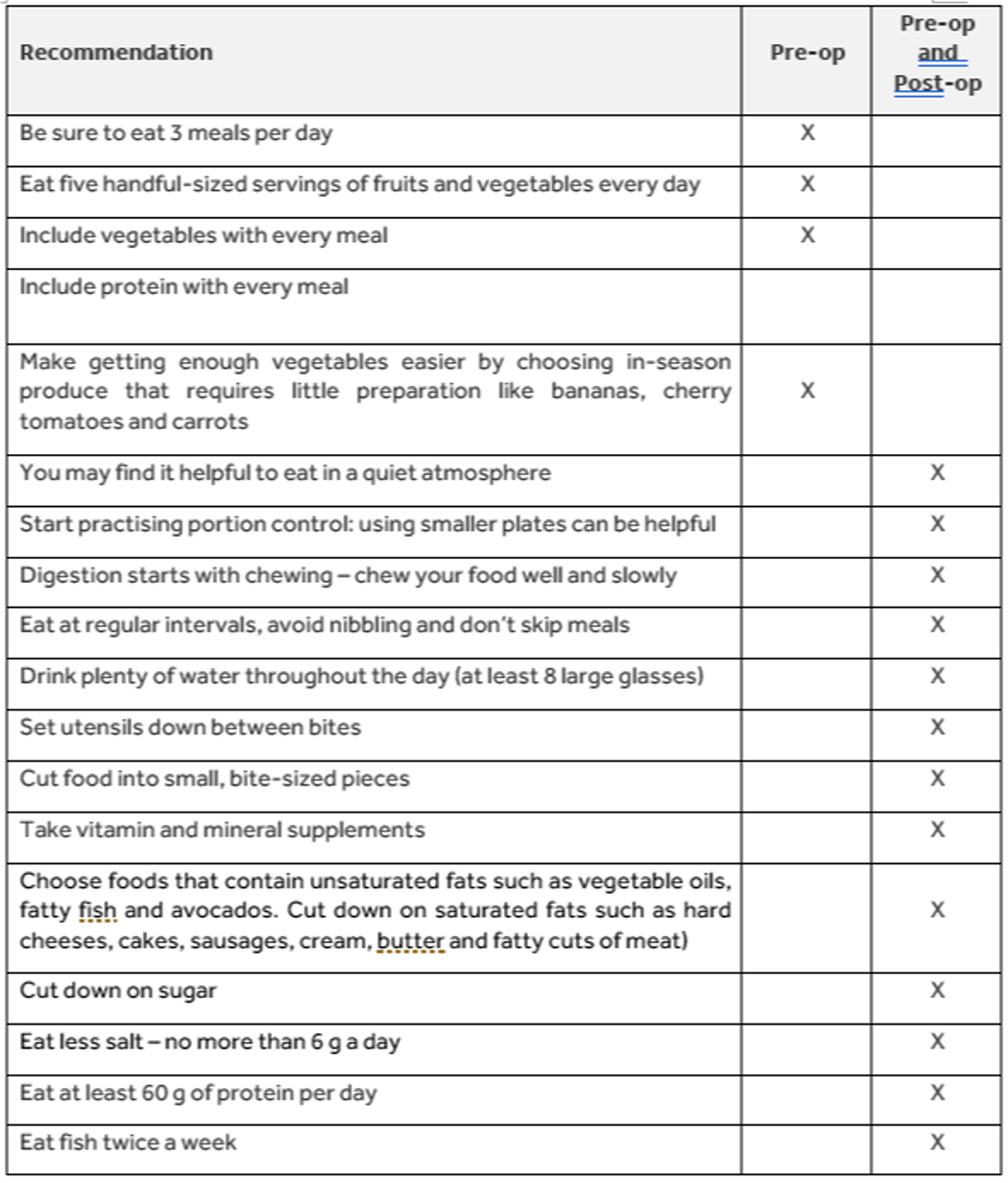
Get active: Physical activity improves your health. Being active doesn’t have to mean spending hours at the gym; there are many ways to fit more activity into your daily life. For example, try getting off the bus a stop early and walking the rest of the way home or taking the stairs instead of the lift.

Don’t get thirsty: Avoid dehydration by drinking still water regularly – at least 1.5 to 2 litres are recommended daily. All non-alcoholic drinks count, but still water and low-fat milk are healthier choices. Avoid soft drinks and fizzy drinks as they are high in sugar and calories, bad for your teeth and can cause discomfort and harmful stomach stretching.

Don’t skip breakfast:  If you skip breakfast, you can become so hungry that you overeat or eat lunch much too quickly.

Energy balance

Here are some suggestions to help you achieve the right energy balance to optimise weight loss:

Energy intake before and after surgery:

After surgery, your caloric intake will drastically decrease because of the smaller size of your stomach. As part of your diet plan, it is best to start getting your body used to the reduced calorie intake before your procedure.

Drop high-calorie foods

With your health care team’s supervision,replace high-calorie foods with low-calorie alternatives.

Eat protein with every meal

Protein is essential for proper muscle and brain development. It also helps you feel fuller longer.

Eat more fish – including fatty fish

Fish is a good source of protein and contains many healthy nutrients. Aim to eat at least two portions of fish a week, including at least one portion of fatty fish. Fatty fish (such as salmon, mackerel, herring and lake trout) contain omega-3 fats.


Categories
SMS - Baria

SMS – Baria-E-020 Eating after surgery

Maintaining a healthy diet after surgery

After surgery is when the real work starts. You will need to change your eating habits to avoid pain and vomiting, rupture of staple lines and, of course, to achieve your weight loss goals.

Changing your eating habits can also help prevent stomach obstruction. Swallowing food in pieces that are too big can make it difficult from the foods to pass into the intestine. It is critical that you eat slowly and chew your food very well to lower the risk of anything becoming caught. Your new motto should be: “slow, small, moist and easy”.

Stop eating as soon as you are full

Overeating even one spoonful can cause you to vomit and lead to harmful stretching of your stomach pouch. Pay attention to your body’s signals, not to the food left on your plate. Indications of fullness may not feel the same as before surgery. Here are some not-so-obvious signs that your stomach pouch is nearly full:

  • A feeling of pressure or fullness in the centre of your abdomen, just below your rib cage.
  • A feeling of nausea, regurgitation or heartburn. You may have a feeling of satiety several minutes after you are actually full. If your pouch is 30 cc, you can put 30 cc in it, and you will not feel full for about 5 minutes. To help you find the right portion size, try the following: Measure 30 cc of water, drink it and wait for a few minutes. If you feel full with this amount and are comfortable, measure this amount of food for each meal. This will prevent stretching of your stomach pouch and the discomfort caused by overeating.

After your surgery, it is easy to accidentally overeat at parties – especially when you are having fun and involved in conversations. It is also easy to nibble beyond fullness. Nibbling is a no-go after surgery, as you may find yourself eating tiny amounts all day long. We suggest making ‘party eating’ one of your meals for the day. Other tips for ‘party eating’ include:

  • Never snack directly from a communal bowl, as it makes portions harder to estimate. Instead, place a portion of the food on a small plate, and take only the amount food you are planning to eat. Remember, you cannot eat more than a small child’s portion now.
  • Take time to socialise more, have fun and enjoy the people at the party. Learn to focus on other things besides the food. Over time, will hopefully feel a sense of freedom from the drive to eat – use this opportunity to find new focus and enjoyments in life.

General mealtime tips

  • Set aside 30 to 45 minutes for each meal. Chew each bite of food many times. If you wear dentures, which don’t chew as well, it may be necessary to stick to ground or soft foods. Learn to eat slowly and deliberately, to allow your body to feel the fullness and digest the food better. When you eat too fast, there is a greater risk of overeating and of not chewing your food well enough, which could cause vomiting.
  • Explain to friends and family why you must eat slowly so they don’t urge you to eat faster.
  • Take small bites of food. Try using a saucer instead of a plate to help with portion control.
  • Use small utensils to help you identify the right portion.
  • Pay attention to taste. Learn how to savour your food. You may find that your tastebuds have changed after surgery.
  • Eat only at mealtimes as suggested by your health care team. Between-meal snacking or ‘nibbling’ on small amounts of food when not recommended by your health care team can sabotage your weight loss efforts.
  • Avoid drinking liquids when eating solid foods. Liquids should be avoided for a period of 30 to 45 minutes before and 30 to 45 minutes after eating solid foods. Combining liquids and solids may cause nausea and may push foods through the stomach pouch faster, potentially causing you to eat more.
  • Eat high-quality, fresh and all-natural foods. Fresh foods are higher in nutrients and more flavourful.

What to eat after surgery

Proteins
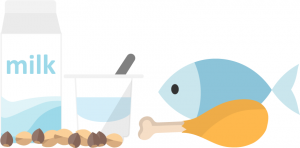
Protein is essential for your muscles as well as for your heart, brain and other organs. Our bodies require a constant supply of protein to repair and replace tissue that becomes worn out or damaged. Protein also helps fight infection.

Because your new stomach pouch has a very small capacity, it is important to eat high-protein foods with every meal to ensure your body gets enough protein to maintain itself.

Eat at least 60 grams of protein a day

A daily intake of at least 60 grams of protein should be the goal for the first 6 months. If you do not take in enough protein, after three weeks, your body will start to break down its own source of protein: muscle. This will cause you to feel nauseated and weak.

In the early days after your surgery, when you are drinking protein drinks, it is easy to keep track of how much protein you are consuming. Later, however, when you are eating regular food, it can be a bit more difficult. Use nutrition labels as your guide. Be careful with protein shakes, drinks and bars, as they tend to be high in sugar and calories.

In some cases, your dietitian may advise you to consume more protein.

Supplements
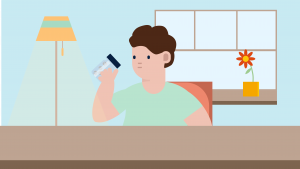
After bariatric surgery, the small stomach pouch does not allow you to eat enough to get all the nutrients you need through food alone. Moreover, the malabsorptive element of bariatric surgery decreases the body’s ability to process vitamins and minerals. To ensure you get enough nutrients, you will need to take multivitamin and mineral supplements daily for the rest of your life. Your health care team will tell exactly which supplements you need. Typically, they will prescribe some combination of the following: 

Vitamin B12: B12 deficiency can develop quickly, with little warning, and can be very dangerous. Food sources containing B12 include all types of animal products (meat, fish, poultry, dairy, eggs). Take care to have your vitamin levels checked regularly by your health care team.

Calcium: You will need to take a calcium supplement daily. Calcium is necessary for healthy bones, teeth and nerve transmission. With the reduced volume of food you can eat, it will not be possible to get enough calcium through diet alone.

Iron: Many patients, particularly women, will require an iron supplement to maintain adequate iron stores and prevent iron deficiency and anaemia. Iron is available in many different forms. Some forms can cause constipation. Consult your health care team regarding the type of iron supplement that is right for you.

Multivitamin complex: A multivitamin complex may be prescribed according to your needs.

Gallbladder medication: Bariatric surgery patients who still have their gallbladder may need to take specific medications during the period of maximum weight loss to minimise the risk of developing gallstones. Ask your health care team if this treatment is necessary for you.

Liquids

Drink 1.5 to 2 litres of still water per day between meals. (Increase this amount by 20% if you are sweating.) In addition to water, you can drink unsweetened, low-calorie and non-carbonated drinks. Juices are high in calories, provoke dumping syndrome (check in “my condition”/”caues and risk factors”)  and provide very little nutritional value. Here are some tips:

  • Avoid carbonated beverages: When a cold carbonated beverage is consumed, it warms and releases gases, distending the stomach pouch and causing harmful stretching. This can cause discomfort and vomiting.
  • Do not drink 30 to 45 minutes before or after meals to keep the stomach pouch from stretching and to prevent vomiting.
  • Sip slowly and carefully.
  • Sip liquids regularly all day long to prevent dehydration.
  • Eliminate high-calorie drinks such as milkshakes, soda, alcoholic beverages and juices. High- calorie beverages tend to be low in nutritional value and contain simple sugars. They are also quickly absorbed and may cause dumping syndrome. 

NOTE: If your urine is dark or your mouth is dry, you are not getting enough liquids.